Age alone doesn't decide it
Plenty of Perth roofs are older than the people living under them and still keep the rain out. Others give up well before their time because of a poor original install, cheap fixings or salt air. So the useful question is not 'how old is my roof?' but 'how worn is it, and where?'
A roof is a system. Tiles or sheets sit on battens, battens sit on rafters or trusses, and sarking, flashings, valley irons and ridge capping tie it all together. When one part wears out, the rest can carry on for a while. When several parts are tired at once, patching becomes a cycle that never quite ends.
This guide covers how roofs age in Perth conditions, what wear looks like on each common material, and how to plan a replacement on your terms rather than in the middle of a winter storm.
How Perth weather wears a roof down
Our climate is hard on roofing in a particular way. It is not constant rain that does the damage. It is the swing between long, hot, UV-heavy summers and a concentrated wet season.
- Sun and heat. Long runs of very hot days fade coatings, dry out mortar and sealants, and make materials expand and contract every day. Over decades that movement loosens fixings and opens up joints.
- Winter fronts. Most of Perth's rain falls between May and September, often arriving with strong north-westerly then south-westerly winds. Wind-driven rain finds gaps that gentle rain never would.
- Salt air. In coastal suburbs such as Cottesloe, Scarborough or Fremantle, sea breezes carry salt that speeds up corrosion on steel, fixings and flashings.
- Summer storms. Occasional thunderstorms and hail test tiles and gutters that are already brittle.
None of this is dramatic on any single day. Added up over thirty or forty years, it explains why so many 1970s and 1980s Perth roofs are now due for attention.
What wear looks like on each roof type
Concrete tiles
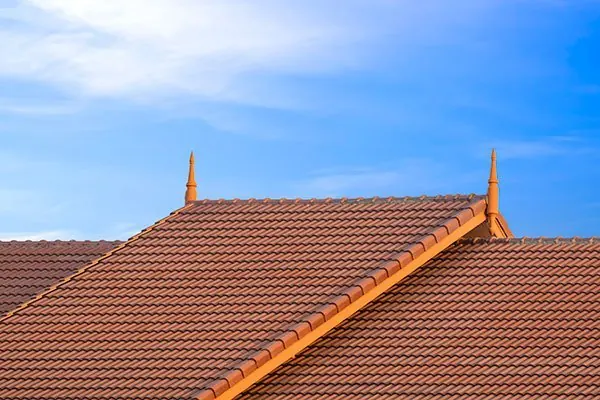
Concrete tiles are the most common roof on Perth's double-brick homes from the 1960s to the 1990s. They are heavy and tough, but the surface slowly erodes, leaving them porous and rough. Look for:
- tiles that have lost their colour and feel sandy to the touch
- moss or lichen holding moisture on the surface
- cracked or crumbling mortar under the ridge capping
- tiles that have slipped or lifted after storms
The tiles themselves often outlast the bedding and pointing that hold the ridges in place. Re-bedding and re-pointing can extend the roof's life, but if the tiles are breaking down as well, you are paying to hold together a roof that is near the end.
Terracotta tiles
Terracotta is durable and keeps its colour, but it becomes brittle with age. A roofer may crack several tiles just walking across an old terracotta roof. Watch for spalling (flaking faces), hairline cracks and mismatched replacement tiles from past repairs.
Steel roofs
Older galvanised iron and early steel roofs show their age as rust, usually starting at laps, fixings, cut edges and anywhere water sits. Newer COLORBOND and Zincalume roofs wear more slowly, but problems still appear where incompatible materials were used, such as lead or copper run-off onto Zincalume, or where the wrong fixings were installed.
Asbestos cement roofs
Corrugated asbestos cement roofs were common on homes and sheds from the 1950s to the 1980s. Weathering makes them brittle and can release fibres. Treat any suspected asbestos roof as a job for specialists and read our asbestos roof replacement page before doing anything else.
The hidden parts that fail first
What you see from the street is only the top layer. Many aging roofs are let down by parts you cannot see:
| Component | What goes wrong with age |
|---|---|
| Battens | Timber dries, splits or loosens; nails corrode |
| Sarking | Older foil tears, sags or was never installed |
| Valley irons | Rust or debris build-up causes overflow into the roof space |
| Flashings | Sealant dries out; flashings lift at walls and chimneys |
| Ridge capping | Bedding cracks and pointing falls away |
A thorough roof inspection includes the roof space where access allows. Our guide to what happens during a roof inspection explains what a roofer should check and report.
Repair, restore or replace?
There is no fixed rule, but the pattern usually becomes clear once the roof has been looked at properly.
Repairs make sense when problems are isolated: a few cracked tiles, one tired valley, a single leaking flashing. A good roof repair job can keep a sound roof going for years.
Restoration can work on tile roofs where the tiles are still solid but the ridges, pointing and surface need attention.
Replacement is usually the better plan when:
- wear is spread across most of the roof rather than in one area
- you are calling a roofer back every winter for a new leak
- battens or sarking have failed underneath
- tiles break when walked on, or steel is rusted through
- the roof contains asbestos cement sheeting
For a closer side-by-side, see roof replacement vs repair. If several of those points sound familiar, it is worth getting a proper assessment rather than another patch.
Planning a replacement on your terms
The best time to replace a worn roof is before it forces your hand. A few things to sort early:
- Timing. Booking work for the drier months reduces the risk of rain delays with the roof open.
- Material. Many owners of older tile homes move to COLORBOND steel for its lighter weight and reflective colour options. Others replace like-for-like. Our tile roof replacement page explains the options.
- Permits. Under the Building Act 2011 (WA), your local government is the permit authority. Whether your re-roof needs a building permit depends on the work, for example a change in roof form or material weight. Check with your local government's building services before work starts.
- Contractor checks. We ask the contractors we work with to hold the registrations and insurance the job needs. Ask to see them before work starts. For larger residential jobs, Building and Energy generally requires a registered building contractor, and Consumer Protection WA explains your rights under home building contracts.
- Upgrades. A re-roof is the cheapest time to add new sarking, a roof blanket under steel, or better roof-space ventilation.
It also helps to think about how long you plan to stay. If the house is your long-term home, a full re-roof with new battens, sarking and flashings sets you up for decades without the yearly round of patch-ups. If you are preparing to sell, a buyer's building inspector will flag a tired roof anyway, and a written report from a roofer gives you something solid to discuss rather than a vague worry hanging over the sale.
On cost, every roof is different, so we don't publish figures here. Our roof replacement cost guide explains what drives the price on a Perth job.
Next step
If your roof is showing its age, an on-site look will tell you far more than any article. Request a free quote through our contact page and we will arrange for a local contractor to inspect the roof, explain what they find and price the options.